A map of any two-person argument
Find the real disagreement.
Paste the email thread, the chat or the transcript, and you'll get back the few points the two of you disagree on, each with the question that would settle it.
Map the Disagreementor try it below ↓
Free · no account · no setup
Try it now
See an office standoff, mapped.
Run the example as it is, or replace it with an argument of your own. The map comes from the same engine as the full tool.
Edit the thread, or run it as it is.
Why most arguments go nowhere
One real dispute, buried in twenty minutes of talking past each other.
A disagreement usually holds one or two things the two people believe differently. The rest is repetition, tone and the same word doing two jobs, and neither person can see that from inside the argument.
Built-in example
An email thread between a manager and a VP, arguing about returning to the office. Ask either of them and they'll say the other side is being unreasonable.
Run it through Crux and it typically comes down to one real values crux, flexibility against cohesion, plus a definitional fight over the word “collaboration,” which each of them uses to mean something different. Most of the rest is phantom: they agree more than either one knows.
Run This Example ↑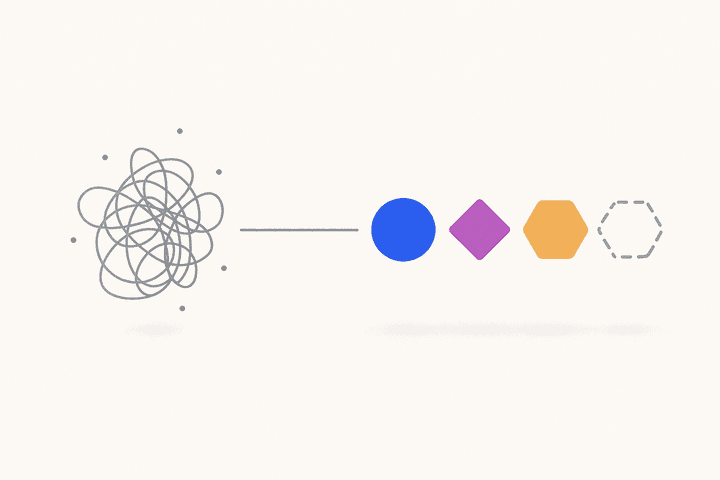
How it works
Paste the Exchange
An email thread, a chat transcript, or two positions summarized side by side, in whatever format you have.
See Where You Split
Each point lands in one of four kinds: factual, values, definitional or phantom. Common ground you share but haven't said out loud gets its own panel.
Click Any Bridge
Each bridge on the map opens to the quotes behind it and the question that would settle it.
Steelman Both Sides
Rewrite each side at its strongest and map it again, or download the map as a PNG to bring into the conversation.
Every divergence is one of four things
Factual
They believe different things about the world. Evidence can settle it.
Values
They weigh the same facts differently.
Definitional
They use the same word to mean different things.
Phantom
They sound opposed and turn out to agree.
+ Common ground
Crux also lists what both sides agree on. There's usually more of it than either one expects, and it goes unsaid because the disagreement is louder.
Click into any bridge
See why, in their own words.
Every bridge opens to the exact quotes from each person, the reason for its classification, and a question built for its type: the evidence that would settle a factual dispute, or two separate terms for a definitional one.
Flexibility vs. cohesion
Person A“People do their best work on their own schedule.”
Person B“Culture doesn't survive without shared time and space.”
Steelman both sides
Argue with each side at its best.
Crux rewrites each position the way its holder would put it on their best day, then maps the argument again. The second map often looks different from the first.
Take it with you
Put the same map in front of both of you.
One click saves the map as a PNG you can drop into the chat or bring to the conversation itself.
crux-map.png
Downloaded
Questions
Does Crux ever say who's right?
No. The map describes the disagreement and leaves the judging to the two of you.
What does Crux look for?
Four kinds of divergence, every time: a fact either side could look up, a value each side weighs differently, a word doing two jobs, or no real disagreement at all. It also lists the common ground nobody has said out loud.
Is my content stored?
No. Crux sends what you paste to Claude to draw your map and returns the map to you. Nothing from the conversation is written to a database or kept on our end afterward.
What happens when it gets a classification wrong?
It can happen, because the map is a language model's reading of your text. Every classification comes with the quotes and the reasoning behind it, so you can see why it called something a value instead of a fact and decide whether you agree.
What does it run on?
Claude, from Anthropic, instructed to classify where two people diverge.
The cartographer's oath
The one rule that isn't negotiable.
Crux never declares a winner.
Every explanation on the map describes the disagreement and stops there, in what it says, what it implies and how it sounds.
Both sides get equal ink.
Neither side is drawn as more reasonable, better informed or more right. Each person gets one column of the map, set the same way.
Crux only draws the map.
If you want a tool to tell you that you're right, this isn't it.